
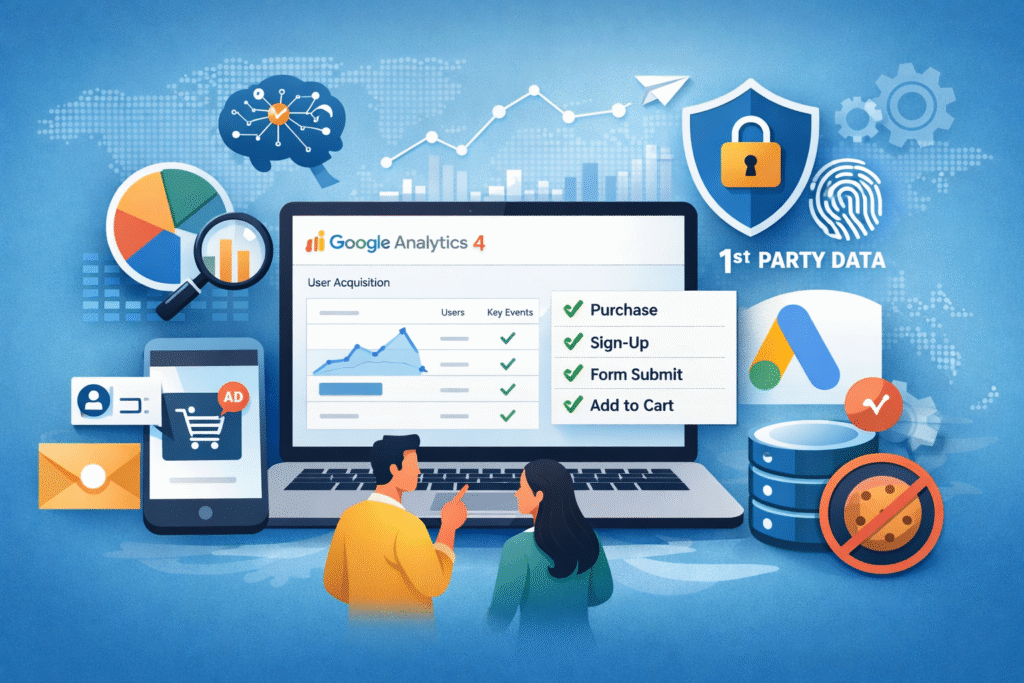
Digital marketing is changing faster than ever before. With increasing privacy regulations, the decline of third-party cookies, and users becoming more conscious about their data, businesses are under pressure to rethink how they measure success. In this evolving landscape, Google Analytics has taken a significant leap forward to ensure marketers and website owners can still gain meaningful insights without compromising user trust.
The transformation of Google Analytics into a more intelligent, privacy-focused, and integrated platform is not just an update — it’s a complete shift in how performance is measured and understood.
A New Era of Data Measurement
For years, marketers relied heavily on traditional tracking methods that often depended on cookies and fragmented reporting systems. However, these methods are becoming less reliable due to stricter data protection laws and browser limitations.
The latest evolution in Google Analytics introduces a smarter, more unified approach to tracking user behaviour. Instead of focusing solely on sessions or page views, the platform now centres around events — meaningful actions that users take on your website or app.
This shift allows businesses to focus on what truly matters: how users interact, engage, and convert.
Understanding the Shift from Conversions to Key Events
One of the most important updates is the transition from traditional “conversions” to what is now referred to as “key events.”
Previously, conversions could be defined differently across platforms, especially when comparing data between Analytics and advertising tools. This often created confusion and inconsistencies in reporting.
With the introduction of key events:
- Businesses can define the most important user actions more clearly
- Measurement becomes consistent across platforms
- Reporting is more aligned with actual business goals
For example, actions like form submissions, purchases, or newsletter sign-ups can now be tracked uniformly, giving you a clearer understanding of what drives success.
This consistency is particularly valuable for marketers who rely on accurate data to optimise campaigns and allocate budgets effectively.
Improved Integration for Better Decision-Making
Another major advancement is the tighter integration between analytics and advertising platforms. This means that campaign data and user behaviour are no longer analysed in isolation.
Instead, businesses can now:
- View campaign performance alongside user interactions
- Understand which channels drive the most valuable actions
- Optimise marketing strategies based on unified insights
This integrated approach removes guesswork and allows for more informed decision-making. Rather than juggling multiple dashboards, marketers can rely on a cohesive system that tells a complete story.
Cross-Channel Insights: Seeing the Bigger Picture
Modern consumers interact with brands across multiple channels — search, social media, email, and more. Tracking these interactions separately can lead to incomplete insights.
The updated analytics framework provides cross-channel reporting, enabling businesses to:
- Track user journeys across different platforms
- Identify the most effective touchpoints
- Understand how channels work together to drive conversions
This holistic view is essential in today’s multi-device, multi-platform environment. It helps businesses move beyond siloed data and focus on the entire customer journey.
Embracing a Privacy-First Approach
Perhaps the most crucial aspect of this evolution is its strong focus on privacy.
With regulations such as GDPR and growing user concerns about data usage, businesses must ensure they are collecting and processing data responsibly. Google Analytics has responded by building a system that prioritises privacy while still delivering valuable insights.
Key privacy-focused features include:
1. Consent-Based Tracking
Users now have more control over their data. Analytics tools respect consent choices, ensuring that tracking aligns with user preferences.
2. First-Party Data Utilisation
Instead of relying on third-party cookies, the platform encourages the use of first-party data — information collected directly from users with their permission.
3. Enhanced Conversions
By using hashed, user-provided data (such as email addresses), businesses can improve tracking accuracy while maintaining privacy standards.
4. AI-Powered Modelling
When data is limited due to consent restrictions, artificial intelligence helps fill in the gaps by modelling user behaviour. This ensures that businesses still get a reliable overview of performance.
The Role of Artificial Intelligence in Analytics
Artificial intelligence is at the heart of this new analytics ecosystem. It not only enhances data accuracy but also makes insights more accessible.
AI-powered features can:
- Predict user behaviour
- Identify trends and anomalies
- Provide actionable recommendations
For example, the system might highlight a sudden drop in conversions or suggest which audience segments are most likely to convert. This allows marketers to act quickly and strategically.
Rather than spending hours analysing raw data, businesses can focus on implementing improvements based on intelligent insights.
Preparing for a Cookieless Future
The decline of third-party cookies is one of the biggest challenges in digital marketing today. However, it also presents an opportunity to build more transparent and trustworthy relationships with users.
Google Analytics is adapting to this shift by supporting technologies that enable effective advertising without compromising privacy.
These include:
- Privacy-focused APIs that allow audience targeting without tracking individuals
- Aggregated data reporting to maintain anonymity
- Advanced modelling techniques to estimate performance
By embracing these tools, businesses can continue to reach their audiences while respecting their privacy.
Enhancing User Experience Through Better Insights
At its core, analytics is not just about numbers — it’s about understanding people.
With improved tracking and reporting, businesses can gain deeper insights into user behaviour, such as:
- Which pages users engage with the most
- Where users drop off in the conversion process
- What motivates users to take action
These insights can then be used to:
- Improve website design
- Optimise content strategies
- Personalise user experiences
Ultimately, better measurement leads to better experiences, which in turn drives higher engagement and conversions.
Why This Matters for Businesses
The evolution of Google Analytics is more than just a technical update — it represents a fundamental shift in how businesses approach data.
Here’s why it matters:
1. Greater Accuracy
With improved tracking methods and AI modelling, businesses can rely on more accurate data.
2. Better Alignment
Consistent definitions of key events ensure that all teams are working with the same metrics.
3. Stronger Privacy Compliance
Built-in privacy features help businesses stay compliant with regulations and build user trust.
4. Smarter Decision-Making
Unified insights enable more strategic marketing and better resource allocation.
Practical Steps to Adapt
To make the most of these changes, businesses should take a proactive approach:
Define Your Key Events
Identify the actions that matter most to your business and ensure they are properly tracked.
Link Your Platforms
Integrate your analytics and advertising tools to gain a complete view of performance.
Focus on First-Party Data
Encourage users to share information willingly through sign-ups, subscriptions, and accounts.
Implement Consent Management
Ensure your website clearly communicates data usage and respects user preferences.
Leverage AI Insights
Regularly review automated insights and recommendations to optimise performance.
Looking Ahead
The future of digital measurement is clear: it will be more intelligent, more integrated, and more respectful of user privacy.
As technology continues to evolve, businesses that embrace these changes will have a significant advantage. They will not only gain better insights but also build stronger relationships with their audiences.
Google Analytics is no longer just a reporting tool — it is becoming a strategic partner in navigating the complexities of modern digital marketing.
Conclusion
The transformation of Google Analytics marks a turning point in how performance is measured in the digital world. By focusing on key events, enhancing integration, and prioritising privacy, the platform is setting a new standard for analytics.
For businesses, this is an opportunity to move beyond outdated tracking methods and adopt a smarter, more ethical approach to data.
In a world where trust and transparency are more important than ever, those who adapt will not only survive but thrive.