
Search engines and modern AI-driven systems need reliable signals to decide which websites deserve to appear at the top of search results. One of the strongest signals they use is backlinks.
If you’re trying to grow your website traffic in 2026, understanding backlinks isn’t optional — it’s essential. In this guide, you’ll learn what backlinks are, why they matter for both traditional SEO and AI search visibility, and how to build them the right way.
What Are Backlinks?
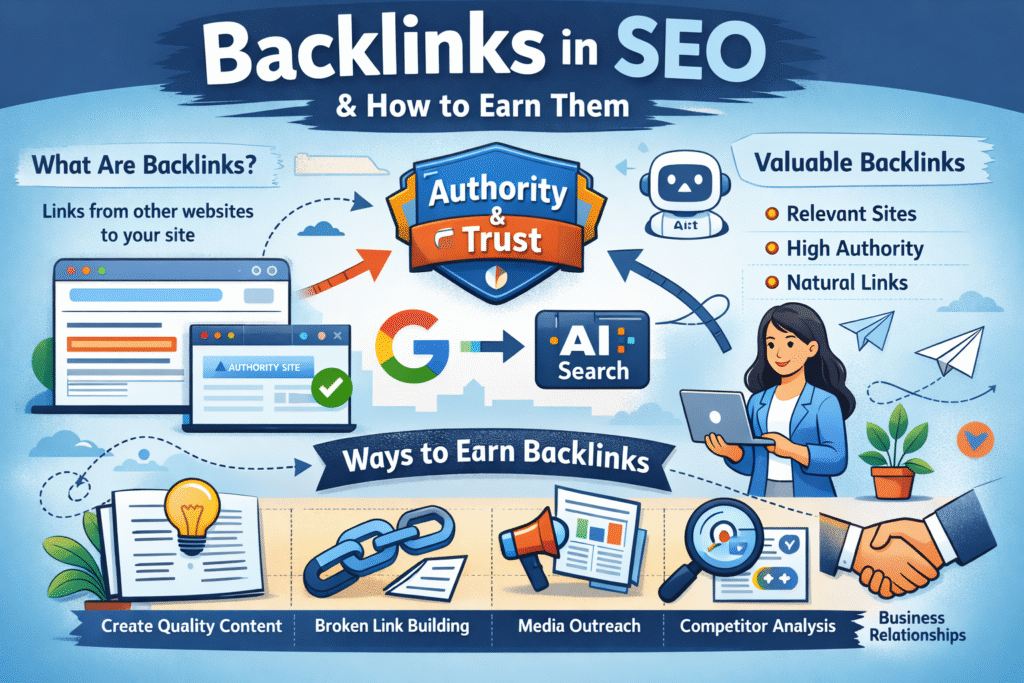
A backlink is simply a link from another website that points to your website.
For example, if a business blog links to your article as a helpful resource, that link becomes your backlink.
From the linking website’s side, it may be called:
- An external link
- An outbound link
- An outgoing link
But for you, it’s a backlink — and it acts like a vote of confidence.
Search engines interpret backlinks as signals that:
- Your content is useful
- Your information is trustworthy
- Your website has authority
The more relevant and high-quality backlinks you earn, the stronger your site appears in search results.
Backlinks also bring referral traffic, meaning real visitors who click the link and land on your website.
Why Are Backlinks Important for SEO and AI Search?
Backlinks remain one of the core ranking factors in Google’s system. While algorithms have evolved, links still help search engines measure credibility.
1. They Signal Authority
When reputable websites link to you, search engines assume your content is worth referencing. This contributes to your site’s authority.
Google’s ranking system historically relied on the PageRank algorithm, which measures how authority flows between pages through links. While PageRank is no longer publicly visible, the concept of link equity still matters.
In simple terms:
- Authoritative pages pass value to the pages they link to.
- Strong links can improve rankings.
- Weak or spammy links can harm trust.
2. They Influence AI Search Visibility
AI-powered search experiences (like AI summaries and conversational search results) are built on top of traditional search infrastructure.
Research across thousands of domains shows that high-quality backlinks strongly correlate with improved AI visibility. Even when AI generates answers, it still relies on authoritative sources behind the scenes.
So if you want visibility in both classic search results and AI-generated results, backlinks remain critical.
What Makes a Backlink Valuable?
Not all backlinks are equal. Some help your rankings. Some do nothing. Some can even damage your visibility.
Let’s look at the key factors that influence backlink value.
1. Follow vs Nofollow Links
Some links contain special attributes in their HTML code:
rel="nofollow"rel="sponsored"rel="ugc"
These attributes tell search engines not to treat the link as a full endorsement.
Traditionally:
- Follow links pass ranking value.
- Nofollow links pass little or limited value.
However, modern search systems treat nofollow links as hints rather than strict instructions. Even nofollow links can contribute to visibility, especially in AI-based search systems.
So while follow links are preferred, natural nofollow links are still useful.
2. Domain and Page Authority
A backlink from a highly reputable website carries more weight than one from a small, unknown blog.
For example:
- A link from a respected government, medical, or major news site is powerful.
- A link from a low-quality directory site is weak.
When building links, focus on websites that:
- Publish well-researched content
- Have genuine organic traffic
- Earn links naturally
Authority is built on trust and reputation, not just numbers.
3. Topical Relevance
Relevance matters more than ever.
If you run a health website, backlinks from health-related websites are far more beneficial than links from unrelated niches like gaming or automotive.
Search engines look for contextual alignment. AI systems also analyse semantic relevance. When a backlink appears in content directly related to your topic, it looks natural and valuable.
Relevance increases:
- Trust
- Engagement
- Conversion potential
4. Placement and Click Potential
Search engines may consider how likely a link is to be clicked.
Links placed:
- High within the main content
- In editorial sections
- Within strong, relevant paragraphs
… are generally more valuable than links hidden in footers or sidebars.
If your link appears as a top recommendation in a guide, it carries more weight than being one of 100 random links at the bottom of a page.
5. Anchor Text
Anchor text is the clickable text of a hyperlink.
Search engines use anchor text to understand what the linked page is about.
For example:
- Natural anchor text: “guide to wedding shoes”
- Unnatural anchor text: “buy men’s wedding shoes cheap online UK best price”
Over-optimised anchor text can trigger spam signals. Building dozens of identical keyword-heavy anchors is risky.
The best approach:
- Keep anchor text descriptive
- Make it sound natural
- Avoid repetition
What Are Link Schemes?
Link schemes are manipulative tactics used to artificially boost rankings.
Examples include:
- Paying for follow links
- Link exchanges (“link to me and I’ll link to you”)
- Automated link creation
- Comment spam
- Low-quality directory submissions
Search engines actively detect and ignore such practices. Large-scale manipulation can result in penalties.
Even if AI systems weigh links slightly differently, spam signals damage trust across the board.
Always prioritise genuine, editorially earned links.
5 Smart Ways to Build Backlinks Naturally
Now let’s explore practical, ethical link building strategies.
1. Create High-Value Resources
The best backlinks are earned, not forced.
Create:
- In-depth guides
- Original research
- Case studies
- Industry statistics
- Tools or templates
When your content genuinely helps people, publishers naturally cite it.
Think long-term. A well-researched article can attract backlinks for years.
2. Use Broken Link Building
Websites often have broken links pointing to deleted pages.
You can:
- Identify broken links.
- Create or match relevant content.
- Suggest your page as a replacement.
This works because you’re helping website owners fix a problem while earning a backlink.
It’s helpful, not pushy — and that’s why it’s effective.
3. Respond to Media Requests
Journalists and content creators frequently look for expert opinions.
By responding to media queries:
- You gain brand exposure.
- You earn authoritative backlinks.
- You build credibility.
This method requires consistency and quick responses, but even a few successful mentions can significantly boost authority.
4. Analyse Competitor Backlinks
If your competitors rank well, study where their backlinks come from.
Ask yourself:
- Can I contribute to that publication?
- Can I provide better data?
- Can I offer a different perspective?
Instead of guessing, you’re using proven link sources that already work in your industry.
5. Leverage Existing Relationships
Your current network can be a powerful link source.
Consider:
- Supplying testimonials
- Publishing joint announcements
- Sharing case studies
- Getting listed as a preferred partner
Business relationships often convert into natural backlinks more easily than cold outreach.
Should You Disavow Links?
If you previously built spammy links, it may be necessary to clean your profile.
However:
- Only disavow links if they are clearly harmful.
- Avoid unnecessary disavows.
- Incorrect use can reduce visibility.
Focus first on removing toxic links manually where possible.
Tracking Your Link Building Progress
Link building requires organisation.
Track:
- Outreach emails
- Responses
- Earned links
- Authority improvements
- Referral traffic
Without tracking, you won’t know what’s working.
Consistency beats intensity. A steady link-building strategy over months outperforms aggressive short-term tactics.
Final Thoughts
Backlinks remain one of the strongest foundations of SEO — and they are just as important for AI-driven search visibility.
But modern link building isn’t about quantity. It’s about:
- Relevance
- Authority
- Natural placement
- User value
If your strategy focuses on helping users, building genuine relationships, and publishing content worth citing, backlinks will follow.
In 2026 and beyond, the safest and most powerful SEO strategy is simple: create real value — and let the web recognise it.