
In today’s fast-moving digital landscape, businesses are constantly searching for reliable ways to stand out online. While AI-generated answers and smart assistants are gaining attention, organic search visibility remains one of the most powerful and sustainable ways to attract the right audience.
If you want consistent traffic, better leads, and long-term growth, understanding and improving your SEO rankings is essential. In this guide, we’ll break everything down in a simple, human-friendly way—so you can actually apply it and see results.
What Are SEO Rankings?
At its core, SEO rankings refer to where your webpage appears in unpaid (organic) search engine results for a specific query.
For example, if someone searches for “best digital marketing services”, the websites listed on page one have the highest rankings. The closer you are to position #1, the more visibility—and clicks—you’re likely to get.
Search engines use complex algorithms to decide these rankings. They analyse factors like relevance, content quality, usability, and authority before displaying results.Why SEO Rankings Still Matter
Even with AI-generated answers becoming more common, strong organic search rankings still play a huge role in digital success.
Here’s why:
- Higher rankings increase brand visibility
- They drive targeted website traffic
- They build trust and credibility
- They generate better conversions
However, it’s not just about ranking high—it’s about ranking for the right keywords.
For instance:
- Ranking for “what is marketing” may bring traffic
- But ranking for “marketing services for small businesses” brings customers
That’s the difference between traffic and revenue.
How Search Engines Rank Websites
Search engines aim to deliver the most relevant and useful results for users. To do this, they evaluate:
- Search intent (what the user actually wants)
- Content relevance
- Website authority
- User experience
They scan and index web pages, then rank them based on how well they match a user’s query.
In simple terms:
👉 If your content solves the user’s problem better than others, you rank higher.
Key Factors That Influence SEO Rankings
SEO can be divided into three main areas:
1. On-Page SEO
This focuses on optimising your website content and structure.
Important elements include:
- Keywords optimisation
Use your target SEO keywords naturally throughout your content. - Title tags
Your page title should include your main keyword and be compelling. - Meta descriptions
While not a direct ranking factor, they improve click-through rates. - Header tags (H1, H2, H3)
These organise your content and help search engines understand it. - Internal linking
Linking to other pages on your site improves navigation and authority flow. - Image alt text
Helps search engines understand visuals and boosts accessibility.
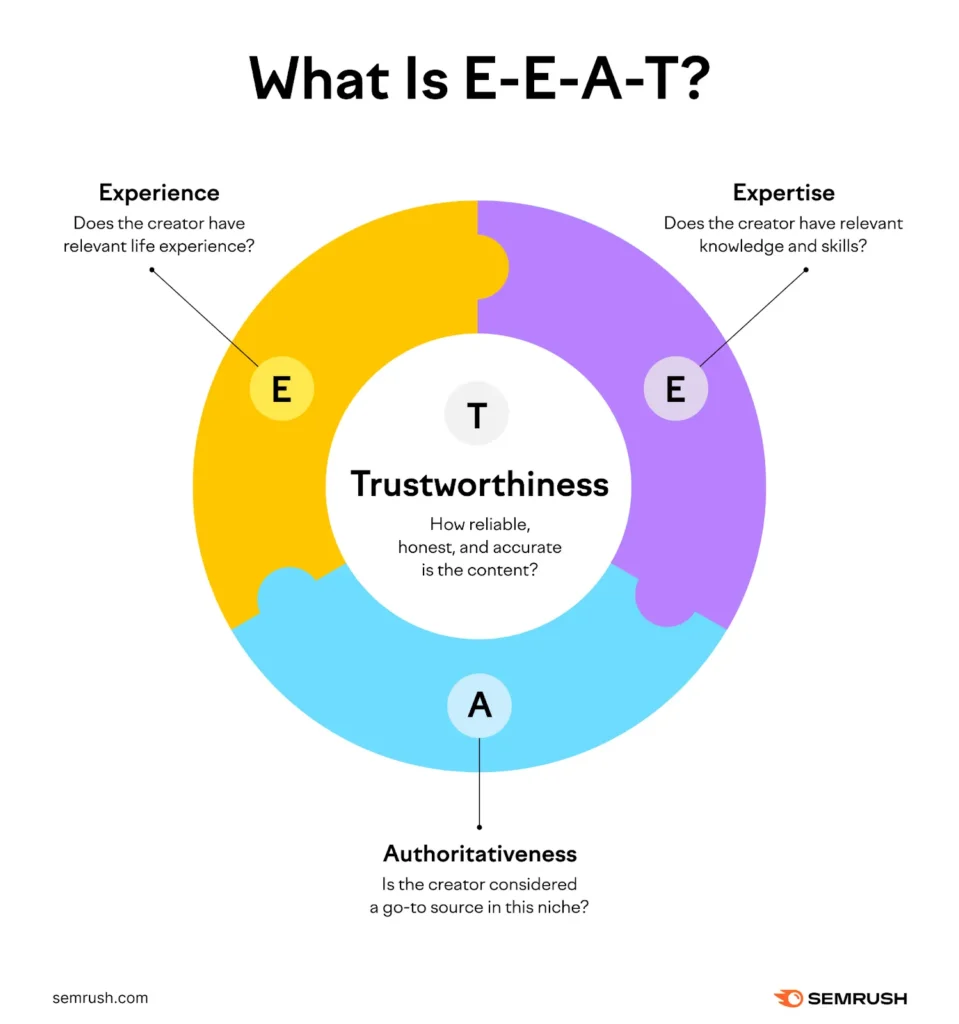
But modern SEO goes beyond keywords. Search engines now prioritise content quality using E-E-A-T:
- Experience
- Expertise
- Authoritativeness
- Trustworthiness
To meet these standards:
- Keep content accurate and updated
- Share real insights
- Use reliable sources
- Write for humans, not just search engines
2. Off-Page SEO
This refers to actions taken outside your website to improve rankings.
The most important factor here is:
Backlinks
When other websites link to your content, it signals trust and authority.
But remember:
👉 Quality matters more than quantity
A few links from reputable websites are far more valuable than dozens of low-quality ones.
Other off-page strategies include:
- Brand mentions (even without links)
- Influencer collaborations
- Online reviews
- Digital PR campaigns
These help build your online reputation and authority.
3. Technical SEO
Technical SEO ensures your website is easy to crawl, index, and use.
Key factors include:
- Core Web Vitals (speed, stability, interactivity)
- Mobile-friendliness
- Secure connection (HTTPS)
- Clean website structure
- No intrusive pop-ups
If your site has technical issues, even great content may struggle to rank.
How to Improve Your SEO Rankings
Now let’s get practical. Here are proven strategies to boost your rankings:
Target Low-Competition SEO Keywords
If you’re starting out or have a smaller website, going after highly competitive keywords can be tough.
Instead:
- Focus on low-competition keywords
- Look for long-tail phrases
- Choose keywords with clear intent
Example:
- Hard: “SEO services”
- Easier: “affordable SEO services for small businesses”
These keywords are easier to rank for and often convert better.
Understand Search Intent
Before creating content, ask:
👉 What is the user really looking for?
There are four main types of intent:
- Informational (learning something)
- Navigational (finding a specific site)
- Transactional (ready to buy)
- Commercial (comparing options)
Match your content to the intent.
If users want comparisons, write comparison articles.
If they want answers, create helpful guides.
Create High-Quality Content
Content is still king—but only if it’s valuable.
To stand out:
- Write in simple, clear language
- Solve real problems
- Add original insights
- Keep content updated
Avoid:
- Keyword stuffing
- Thin content
- Copying competitors
Your goal is to be the best result, not just another result.
Fix Technical Issues
Even small technical problems can harm your rankings.
Check regularly for:
- Broken links
- Slow loading pages
- Indexing issues
- Mobile usability errors
Tools like Google Search Console can help identify these problems.
Fixing them often leads to quick improvements.
Build High-Quality Backlinks
Link building is still a strong ranking signal.
Effective methods include:
- Outreach to relevant websites
- Guest blogging
- Creating shareable content
- Digital PR campaigns
- Fixing broken links
Focus on building genuine relationships rather than just chasing links.
Track Your SEO Performance
You can’t improve what you don’t measure.
Track:
- Keyword rankings
- Organic traffic
- Click-through rates (CTR)
- Impressions
If a page has high impressions but low clicks, it may need:
- A better title
- A stronger meta description
- Improved relevance
Regular tracking helps you refine your strategy.
SEO and AI: The New Connection
Modern search is evolving, but SEO isn’t going anywhere.
In fact, many SEO best practices also improve visibility in AI-generated results.
Why?
Because both rely on:
- High-quality content
- Clear structure
- Trusted sources
- Authority signals
So, by improving your organic SEO strategy, you’re also preparing for the future of search.
Final Thoughts
Improving your SEO rankings isn’t about quick hacks or shortcuts. It’s about building a strong, trustworthy online presence over time.
Focus on:
- The right SEO keywords
- High-quality content
- Solid technical foundations
- Genuine authority
And most importantly—always create content for people first.
Search engines are getting smarter every day. The more helpful and authentic your content is, the better your chances of ranking higher and staying there.